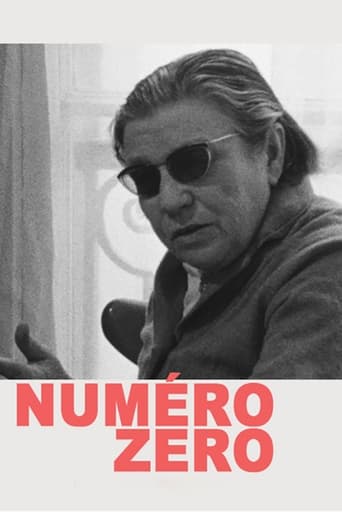
Numéro zéro (1971)
Werdykt Radaru
Cichszy tytuł, który wciąż szuka swojej widowni, choć ocena opiera się na wąskiej próbie, więc traktuj ją orientacyjnie.
Opis
A family portrait in which the director profiles his grandmother, Odette Robert. Eustache includes in the film the conditions of its production — he is seated at the table with her, pours her some whiskey, speaks with the camera operator, manipulates the clapboard at the head and tail of the reels, and even takes a phone call. Robert, who was seventy-one, speaks rapidly and tells the story of her life, starting from her early childhood in villages in the Bordeaux region of France. A shorter version of the film ("Odette Robert") was edited in 1980 to be broadcast on television on TF1. The complete film only gained exposure in 2002, when it was salvaged by Boris Eustache, Thierry Lounas, João Bénard da Costa, Jean-Marie Straub, and Pedro Costa.
Opis i metadane pochodzą z The Movie Database (TMDB).
Movie DNA · Double Feature
Co obejrzeć po Numéro zéro?
Porównaj klimat, emocje, tempo, zwroty akcji, humor, romans, skalę i realizm — i dostań jeden idealny drugi seans.
Uruchom Double Feature RadarKontrola treści
Based on the age rating and content tags — not a full scene-by-scene list.
Radar blends quality, momentum and freshness into one “what to watch now” number — so a great older film can sit lower than a rising new release. The Quality signal above is the time-neutral rating, which is why an acclaimed classic keeps a high quality score even when its Radar number is lower. Radar outputs are editorial algorithmic recommendations, not objective facts, and may change as signals update. A Radar score is not the same as a TMDB, IMDb or critic rating. How scoring works (v3.0).
 This product uses the TMDB API but is not endorsed or certified by TMDB. Dane o dostępności w streamingu dostarcza JustWatch.